
You likely have a clogged underground drain in Aurora if more than one fixture drains slowly at the same time, your toilet gurgles when you run the sink, or the lowest drain in your home backs up. Those are signs the blockage sits in the buried line rather than a single pipe under one sink. Around here, the shifting bentonite clay soil pulls older pipe joints apart, and that is where clogs and roots usually get their start.
The ground in Aurora does not sit still, especially through winter, and that same freeze-thaw movement quietly works on the sewer line buried under your yard year after year.
The difference that matters is where the water is stuck. A clog in one sink stays in that one fixture, but a clogged underground drain shows up in several places at once because every drain in your house feeds the main line before it leaves the property. When that buried line backs up, the water has nowhere to go, so it rises in the lowest opening it can find, which in most Aurora homes is a basement floor drain or a first-floor shower. Another tell is waste that clears for a few days and then comes right back. That pattern usually means a partial blockage in the underground line, not a one-time clog you can plunge away.
Aurora makes this harder than a lot of places. Older neighborhoods still run clay or cast iron sewer laterals, and that kind of pipe cracks at the joints as the clay soil swells and shrinks with each wet-and-dry cycle. Per the City of Aurora, homes built after 1985 tend to have more durable PVC sewer service lines, while Aurora water service lines are generally copper and much less likely to break. If your house predates that, and especially if mature trees sit near the line, your buried drain is the weak point in the whole system.
How do I locate a underground drain clog?
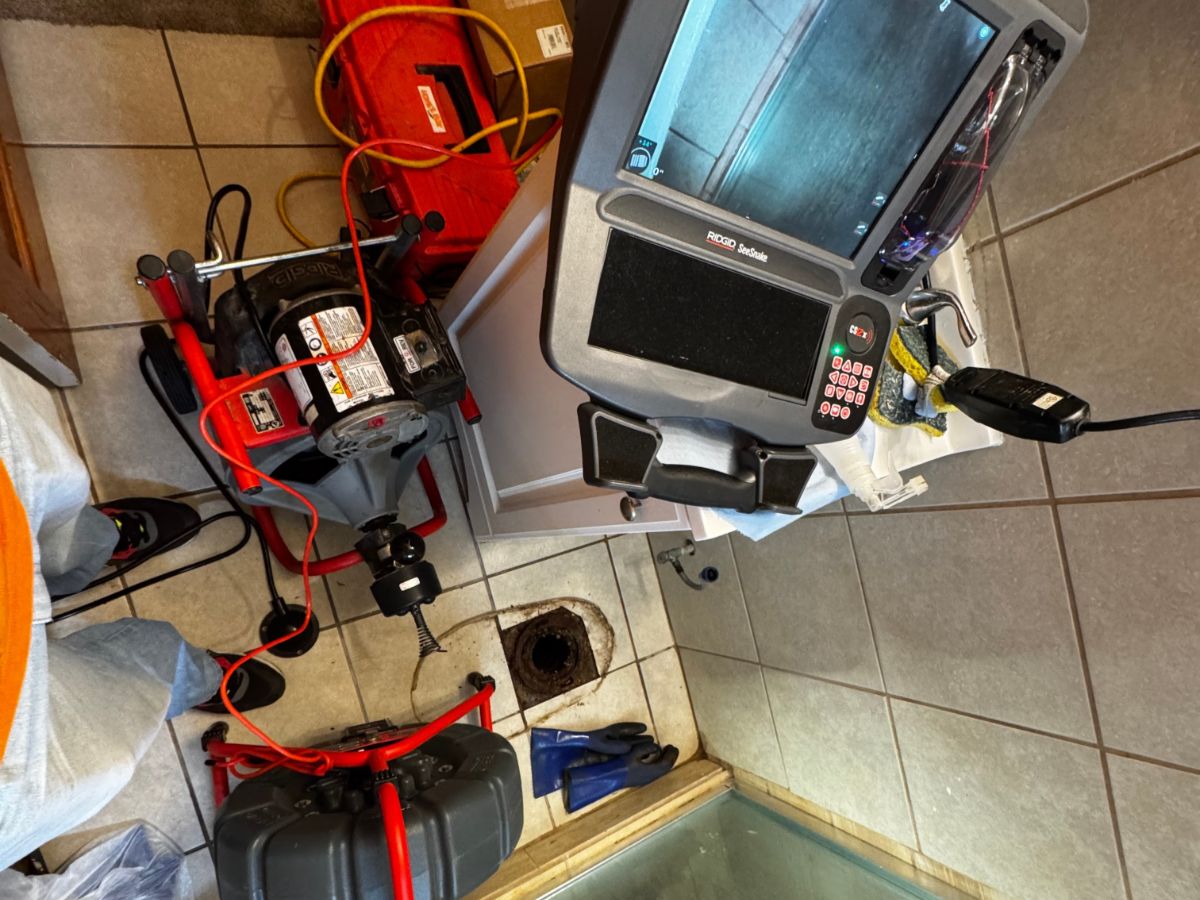
Start by watching which fixtures act up and in what order. If only one sink or tub is slow, the clog is local and close to that fixture, but if several drains slow down together or the trouble always shows up first in your lowest drain, the blockage is in the main underground line. Run water in an upstairs sink and listen at a downstairs toilet, because gurgling means air is trapped behind a blockage in the buried pipe. You can also check your cleanout, which is the capped pipe near your foundation or out in the yard, and if water is standing in there, the clog is downstream, out toward the street. None of this tells you exactly where along the pipe the clog sits, so for that a plumber runs a drain camera down the line to find the blockage, measure how far out it is, and see whether roots, grease, or a broken joint caused it. A camera scope takes the guesswork out and shows you the real condition of the pipe.
How to unclog buried drain pipe?
A buried drain pipe is cleared from the cleanout, not from inside your house. A plumber runs a tool down the line to break through the blockage and then confirms the pipe is clear, and the right tool depends on what is causing the clog. A motorized cable, also called an auger or snake, spins down the line and chops through the blockage, which works well for a straightforward clog and gets water moving again fast. When you are dealing with heavy buildup, grease, or root mats, high-pressure hydro jetting in Aurora is the stronger fix, because jetting blasts water at the pipe walls to scour off years of scale and grease and wash the debris out instead of just poking a hole through the middle. Aurora’s hard water, around 11.2 grains per gallon, leaves scale on the inside of pipes, so jetting is often what actually resets a line to a clean baseline here. Store-bought chemical drain cleaners are the wrong tool for a buried line, since they rarely reach the real blockage and in older cast iron pipe they thin the walls and can make the problem worse.
Is a plumber needed for deep clogs?
Yes, a deep clog in your underground line is a job for a licensed plumber, and the reasons go beyond just owning the equipment. The tools matter first, because a camera, a mainline auger, and a hydro jetter are not things most homeowners have, and a consumer jetter cannot match professional pressure. The risk matters too, since pushing too hard with the wrong tool can crack an already-brittle clay pipe and turn a simple cleaning into a dig-and-replace job. The rules matter as well, because in Aurora any work that ties into the city sewer main needs a permit, so this is not something to hand to an unlicensed handyman. One local homeowner shared on Google that after his kitchen drain caused wet basement carpet, our team “troubleshot our drain issue using a line camera and other equipment and then gave me a concise and clear explanation of what was going on.” That kind of diagnosis before any digging is exactly why deep clogs belong with a pro. If a scope shows a cracked or root-invaded section, you may be looking at sewer line repair rather than a simple cleaning.
What is the average cost to unclog an underground drain?
In the Denver metro, which includes Aurora, unclogging a main underground line runs about $440 to $750 for most jobs. Snaking a smaller line is cheaper, often in the $125 to $315 range, and it handles the simpler clogs. A few things push the price up or down:
- How the plumber reaches the line. A clog you can hit through an existing cleanout costs less than one that means pulling a toilet or digging.
- What is causing it. A grease clog clears faster than a root mat, which takes more time and heavier tools.
- Whether you add a camera inspection to see the pipe condition, which is money well spent on an older Aurora line.
If a scope turns up a cracked or collapsed section, the job moves from a cleaning to a repair, and that is a different budget. We give you a clear, flat price up front before any work starts, so you know the number before we begin.
If Your Aurora Drain Keeps Backing Up, Here’s How We Can Help
When a buried drain in Aurora slows down or backs up, it usually comes back, because the same clay soil and hard water that caused it are still working on your line. That is why we scope the buried line first at Superior Mile High Plumbing, find the real cause, and then clear it at the source, often with hydro jetting in Aurora that resets the pipe to a clean baseline instead of just poking a hole through the clog. Catching it early keeps a slow drain from becoming a basement full of water. Call Superior Mile High Plumbing at (303) 304-0784 to book a camera inspection and get a straight answer on what your line needs.