
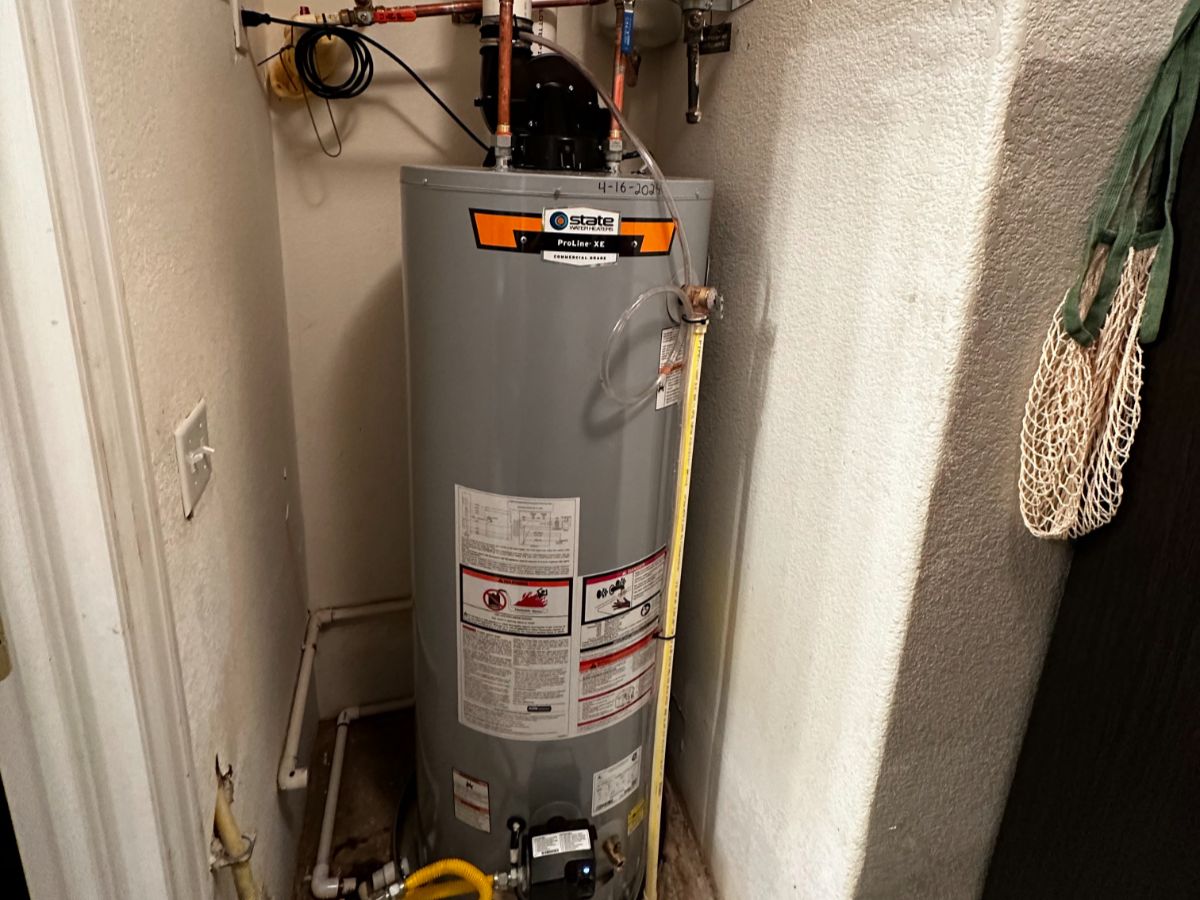
At Aurora’s elevation, a gas water heater burns with less oxygen than the same unit would at sea level, so its rated heat output drops a little and it can run less cleanly if it was never set up for our altitude. Aurora sits high, around 5,500 feet, and parts of south and southeast Aurora climb past 6,100 feet. That thinner air is exactly why the setup of your gas water heater matters more here than it does in a lot of the country.
Gas water heaters are rated for elevations up to 2,000 feet, and above that the maker’s instructions take over. Aurora is well above that line. Some units are approved to run as built up to 7,700 feet, which covers Aurora, and others are built for sea level to 2,000 feet and have to be ordered or set up for high altitude.
Here is what is actually going on inside the burner. Gas needs oxygen to burn, and a cubic foot of air up here holds roughly 18 percent less oxygen than the same cubic foot at sea level. Your water heater does not know it moved uphill, so if nothing accounts for that thinner air, the fuel-to-air balance shifts and the flame does not burn the way the engineers intended. The fix is not complicated, but it has to follow the maker’s high-altitude instructions for that exact unit.
Getting this right is trade knowledge, not guesswork, which is a big part of why water heater services in Aurora should be handled by someone who installs at this elevation every day.
What type of water heater performs best in Aurora’s altitude?
At Aurora’s elevation, the type that gives up the least performance to altitude is a standard electric water heater, because electric heating elements do not burn fuel and do not care how thin the air is. They heat the same up here as they do at sea level. Gas units are where altitude shows up. A standard atmospheric gas water heater loses a slice of its rated heat output up here and depends on drawing enough combustion air out of the room, which thinner air makes fussier. That is one reason venting choice matters at this elevation, though venting is its own subject. Tankless gas units are also affected by altitude, since most have an altitude setting that has to match where the unit is installed, and Aurora falls outside the factory default band. Whether a tankless makes sense for your home is a separate decision worth its own look. The short version for Aurora: electric shrugs off the altitude, and any gas option needs to be set up for the elevation to run right.
Does altitude change how much hot water I get?
It can, and here is the honest reason. When a gas water heater is set up for Aurora’s elevation, its burner runs at a lower input than the same model would at sea level, and that means a lower firing rate. Less firepower means the tank takes a little longer to reheat a full load of cold water. Day to day, a correctly sized 40 or 50 gallon tank should still keep up with normal showers and laundry. You are most likely to feel it during back-to-back use in winter, when the water coming into the tank is colder and recovery takes longer. Recovery ratings on the label assume 58 degree supply water, so a cold-season gallon takes more work than the label suggests. If your household is genuinely running short on hot water, altitude is only one possible reason, and the size of the tank can matter just as much. A quick water heater repair service in Aurora can tell you whether it is the altitude, the size, or something that needs fixing.
How do I know if my gas water heater is altitude compliant?
Start with the rating plate and the installation manual. Where the altitude limit shows up depends on the brand: some print the approved elevation range on the plate, some flag a high-altitude model with a letter in the model number, and others keep it in the manual. If your unit is only approved below Aurora’s elevation, it needed a high-altitude setup when it was installed. Here is the part that trips people up: there is no single altitude rule that covers every water heater. Aurora follows the 2021 International Fuel Gas Code with no local altitude amendment, so what governs your unit is the manufacturer’s instructions for that model. So compliance here is really about matching the appliance to the elevation and confirming the input was set correctly. That is not a check to make by eye, and it is a good reason to have a licensed plumber verify the setup. Superior Mile High Plumbing is a licensed Colorado plumbing contractor, and our owner holds a Colorado master plumber license, so we can check whether your setup matches your unit’s instructions.
What would make a gas hot water heater not work?
At Aurora’s elevation, the failures tied directly to altitude usually trace back to combustion in thin air. Watch for these:
- A pilot or burner flame that will not stay lit, which can point to a burner that is not matched to the air and gas it is getting.
- A unit that was installed without the high-altitude setup it needed, or one where the input was never derated for the elevation, which leaves the burner running outside its intended range.
- Combustion-air or venting trouble, which shows up worse at elevation because there is less oxygen to spare, so a weak air supply can show up as yellow, lazy flames or soot.
The common thread is that our thin air gives a poorly set up gas unit no margin for error. A flame that flickers out, a burner that sounds rough, or soot around the draft hood are all signs the combustion side needs a trained eye rather than a reset button. For water heater installation service in Aurora, whether a new install or replacement, getting the altitude setup right from the start prevents most of these headaches.
Running a gas water heater in Aurora means running it in air with meaningfully less oxygen than the factory assumed, and that thin air is unforgiving of a setup that was not dialed in for our elevation. We handle the whole picture, from confirming your unit is set up correctly for our elevation to sizing a replacement that keeps up with your household on the coldest mornings. If your hot water is coming up short or your burner is acting up, call Superior Mile High Plumbing at (303) 304-0784 or book a water heater check.