
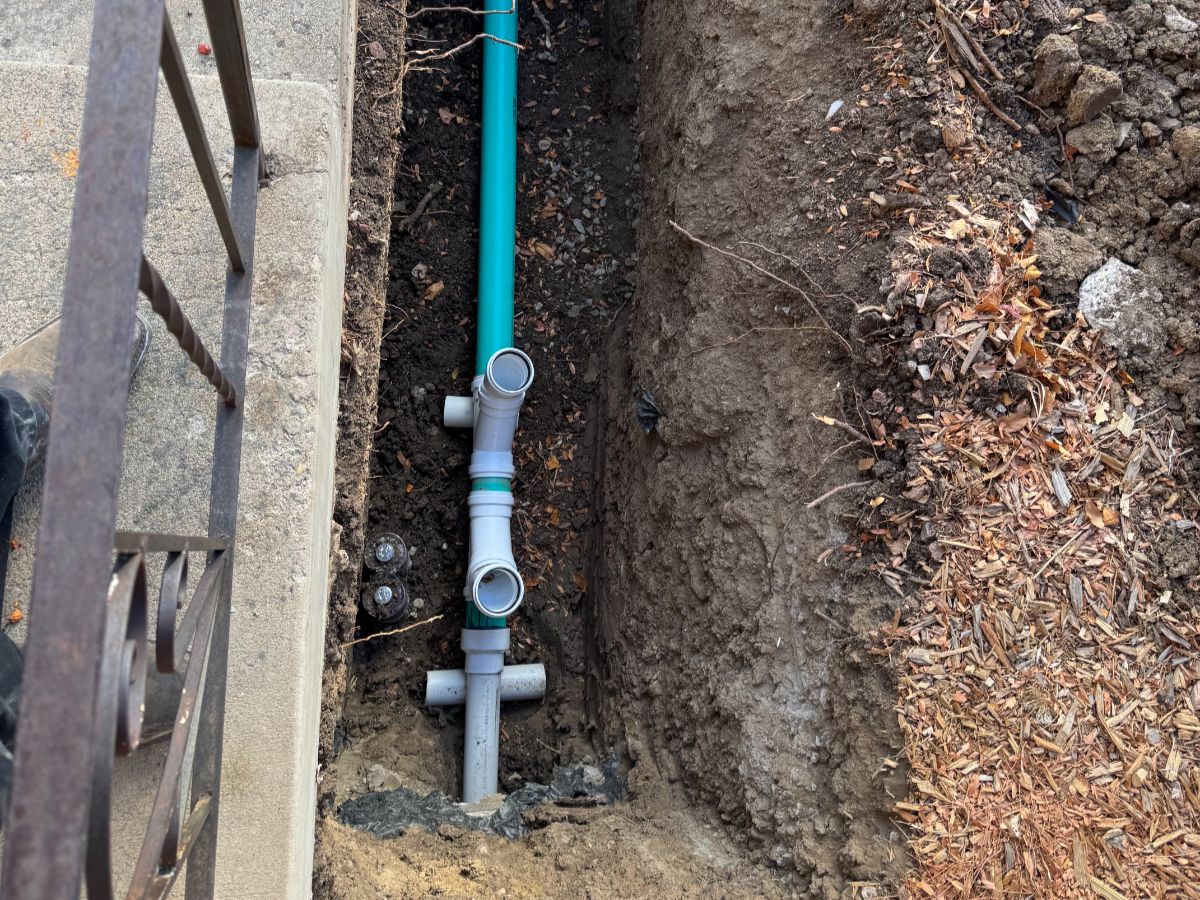
In Aurora, Colorado, you are responsible for the sewer line that runs from your house to the city’s sewer main. That includes the buried pipe, called the lateral, all the way to and including the connection at the main. Aurora Water only maintains the main lines that sit in the public right of way, meaning the streets, alleys, and easements, so everything from your home out to that connection is yours to fix and pay for.
Many Aurora homeowners learn this during their first backup, when the first call goes to the city expecting a free fix.
The city’s crews clean and inspect the main itself, but the service line between your house and the tap is not theirs to repair. Under city code, the building owner keeps ownership of that line and is responsible for maintaining and repairing it, right down to the tap connection.
Aurora notes that homes built after 1985 generally have PVC sewer service lines, while older homes can have clay. Around our home base in High Point, as anywhere in Aurora, the age of the house is the first clue to what is in the ground, and a clay line with cracked or separated joints is the kind that lets roots in and starts backing up. If you want to know what you are actually working with, a sewer inspection in Aurora with a camera scope is the best way to see the material and condition of the pipe you own.
Do all drains lead to the sewers?
In your home, yes. Every sink, tub, shower, toilet, and floor drain feeds into your interior drain pipes, which all join up and flow into a single buried lateral line under your yard. The pipes inside your walls and under your floors carry wastewater to the underground lateral, and that lateral connects your home to the city’s main sewer.
What does not go to the sanitary sewer is stormwater. Aurora keeps its sanitary sewer and its storm drainage separate, and city code makes it unlawful to route roof runoff, groundwater, or surface water into the sanitary sewer. Rain and snowmelt are supposed to head to storm drains or a natural outlet instead. That matters because groundwater can still seep into a sewer line through cracks, which is one more reason a damaged line acts up. If several drains slow down at once, the trouble often points to the line they all drain into rather than a single fixture.
Can two houses share a sewer line?
It can happen, but it is not the default. Aurora city code calls for a separate sewer line for every building, with exceptions such as a rear building on an interior lot or a private internal sewer system in a multi-family or commercial complex. A shared line is a real headache when something goes wrong, because a clog or collapse in the shared section affects every home on it, so it pays to know whether you are on one.
If you think you might be on a shared line, confirm it before there is a problem, not during a backup. A camera inspection paired with a line locator can show where your pipe runs and whether it joins another line before the tap. When a shared lateral is old clay and needs work, a proper sewer repair or replacement in Aurora needs a permit and inspection because it ties into the city system, so this is not a job for an unlicensed handyman.
Where are the sewer lines on my property?
Your lateral runs from where the main drain exits your foundation, through the yard, and out to the tap at the city main in the street, alley, or an easement. The exact path depends on where the main sits relative to your house. Aurora Water keeps its mains in the public right of way, the streets, alleys and easements, so depending on the block your lateral might run to the alley behind the property or out to the street in front.
To actually pin down your line, look for the cleanout, a capped access pipe often near the foundation or in the yard, and have the buried portion located and camera-scoped. A few practical starting points:
- Find the interior main drain where it leaves the lowest level of the house
- Locate the exterior cleanout cap at ground level
- Note whether your block has an alley, which may mean the main and tap are in back
- Have a plumber run a camera and locator to map the true path and depth
How do I tell if a sewer backup is my line or the City of Aurora’s main?
Start with what is backing up and where. If wastewater is coming up in the lowest fixtures of your home, a basement floor drain, a lower-level shower, tub, or toilet, and it is only your house, the cause is likely on your side, either a clogged drain inside the home or a problem in your lateral, and both are yours to handle. A sagging, leaking, or ruptured lateral often shows up as a backup at the lowest level of the home, and fixing it is still the owner’s job.
When a backup hits, call a licensed plumber to get it cleared and diagnosed. If neighbors are dealing with the same problem at the same time, mention that too. Hydro jetting can then clear roots and heavy buildup out of the line once the blockage is found.
When your basement drain backs up in Aurora, the frustrating part is not knowing whether you are on the hook or the city is, and that uncertainty costs time you do not have during a backup. At Superior Mile High Plumbing, we handle sewer line repair in Aurora, camera-scoping your lateral to show you exactly where the blockage sits and which side of the tap it is on, then clearing it and laying out your options plainly. Contact us at (303) 304-0784 and we will get a licensed plumber out to find the problem and stop the backup.